
 The 2025 Southern Region Small Farms Conference in Mobile, Alabama brought together farmers, advocates, researchers, and service providers from across the South around a shared goal: helping small farms thrive while building healthier, more resilient communities.
Held December 3–5 at the Renaissance Mobile Riverview Plaza Hotel, the event was organized by the Rural South Institute in collaboration with the Alabama State Association of Cooperatives, the Southern Risk Management Education Center, and a powerful network of partners and sponsors. The Organic Trade Association (OTA) and The Organic Center were proud to both sponsor and actively participate in this year’s conference.
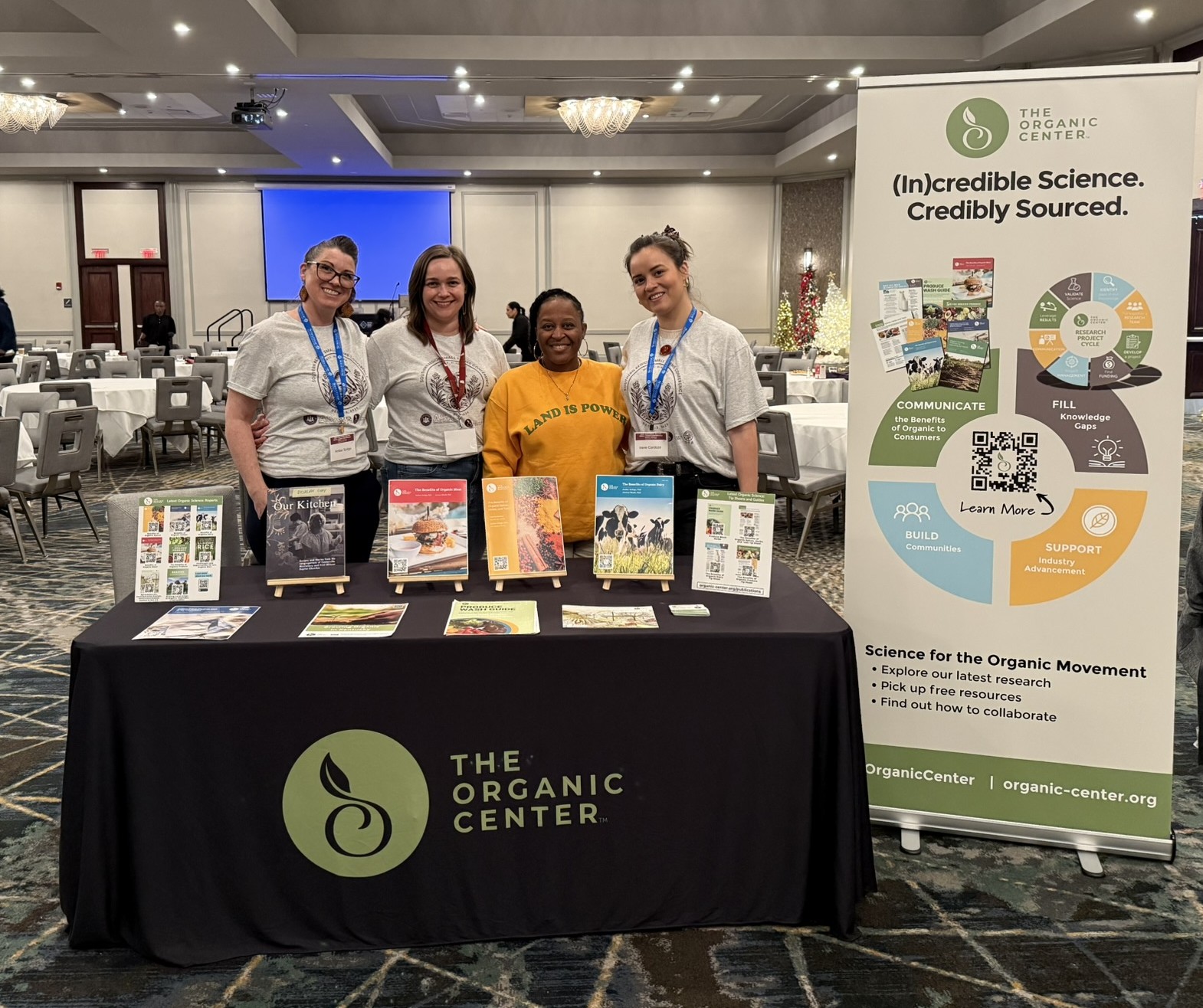
The Organic Center was represented by Dr. Amber Sciligo, Senior Director, and Dr. Kate Munden-Dixon, Postdoctoral Research Fellow. OTA was represented by Stephanie Jerger, Vice President of Operations, and Irene Cardozo, Director of Industry Marketing and Communications. Together, The Organic Center and OTA brought resources, science, and stories from the organic sector directly to farmers, cooperatives, and rural leaders across Alabama, Mississippi, Arkansas, and beyond.
Centering community, legacy & land stewardship
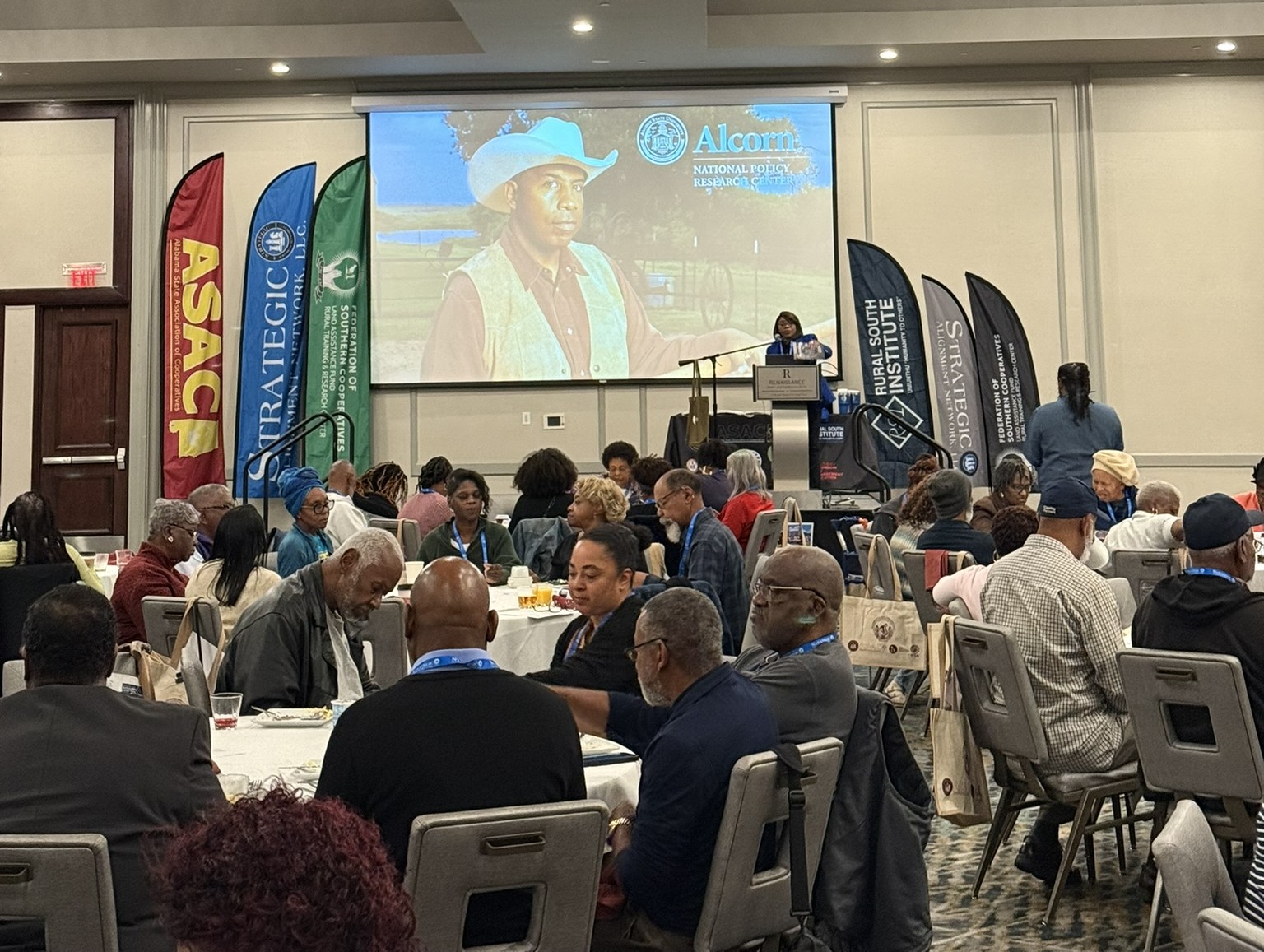 From the opening welcome, the tone of the conference was clear: this was about more than policy or programs—it was about people, land, and legacy. The theme, “Holistic Approach to Advancing Family Farms and Producers in Health & Wellness, Sustainable Agriculture Practices and Risk Management,” showed up in every session, from technical workshops to wellness conversations.
Farmers and conference participants shared both challenges and bright spots in their operations:
- Access to capital and credit remains a major barrier, especially for new and beginning farmers and small, family-run operations.
- Many producers voiced the need for business planning support, especially around farm business plans, credit-building, recordkeeping, and succession planning.
- Participants highlighted gaps in broadband and technology access in rural communities—and the need for training on social media and AI tools that can help farmers market their products and run their businesses more efficiently.
- Others raised concerns about soil contamination, climate extremes (droughts and floods), wildlife pressure, and zoning conflicts, and emphasized the need for more technical support and demonstrations around soil health, remediation, and climate resilience.
At the same time, farmers spoke with pride about what is working: cooperative models that help them share knowledge and markets, crop rotation and rotational grazing, use of high tunnels, peer learning through farm field days, and the sheer resilience of their communities.
Organic at the center: myth-busting and market opportunity
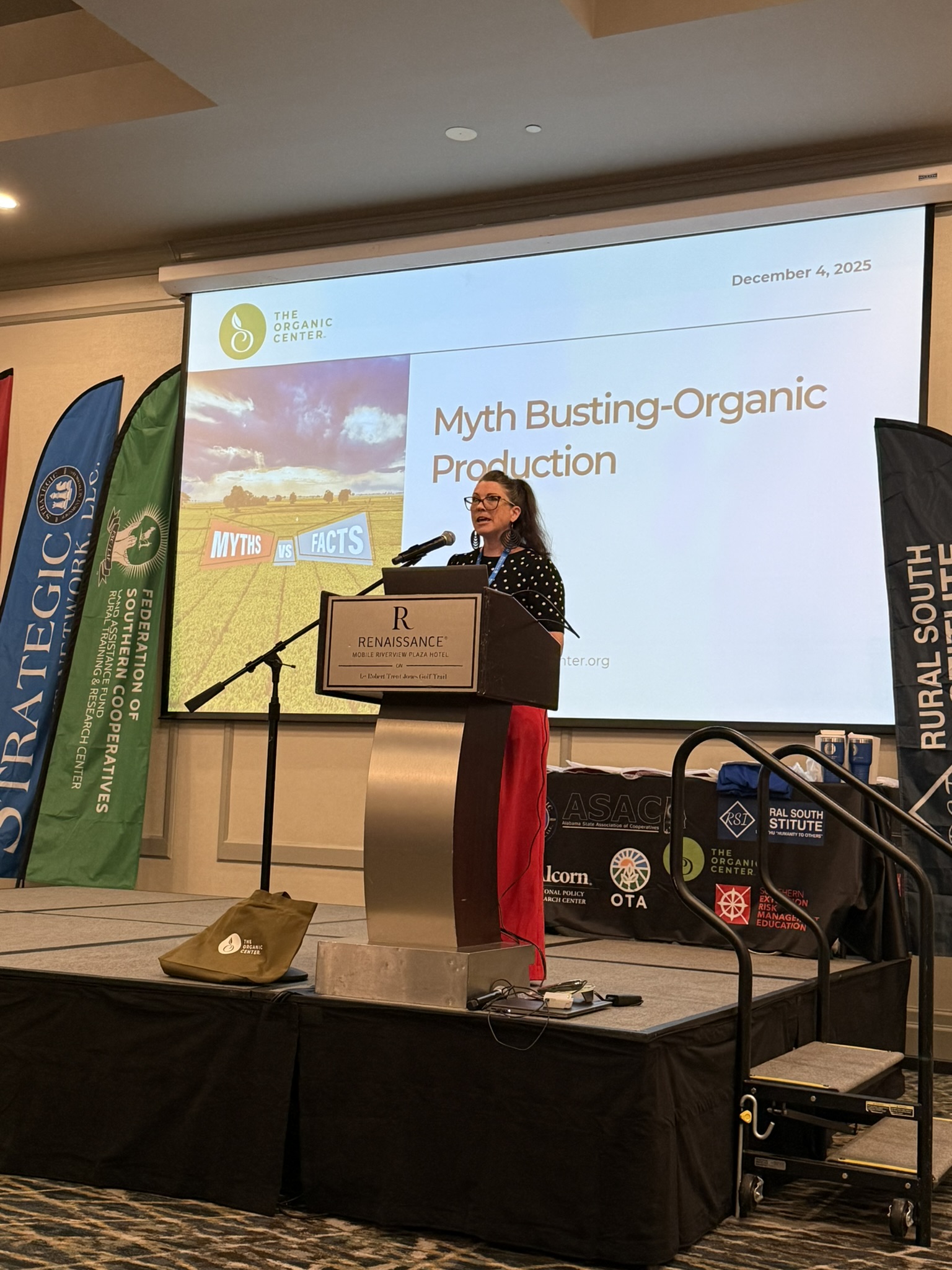
On Thursday, Dr. Amber Sciligo led a general session on “Myth Busting Organic Production,” unpacking common misconceptions and grounding the conversation in peer-reviewed science. She highlighted how organic farming supports biodiversity, soil health, and climate resilience, while also protecting farmers, farmworkers, and nearby communities from unnecessary chemical exposure.
Amber also underscored that organic is not a niche—it’s one of the fastest-growing sectors in U.S. agriculture and increasingly aligned with consumer priorities and values.
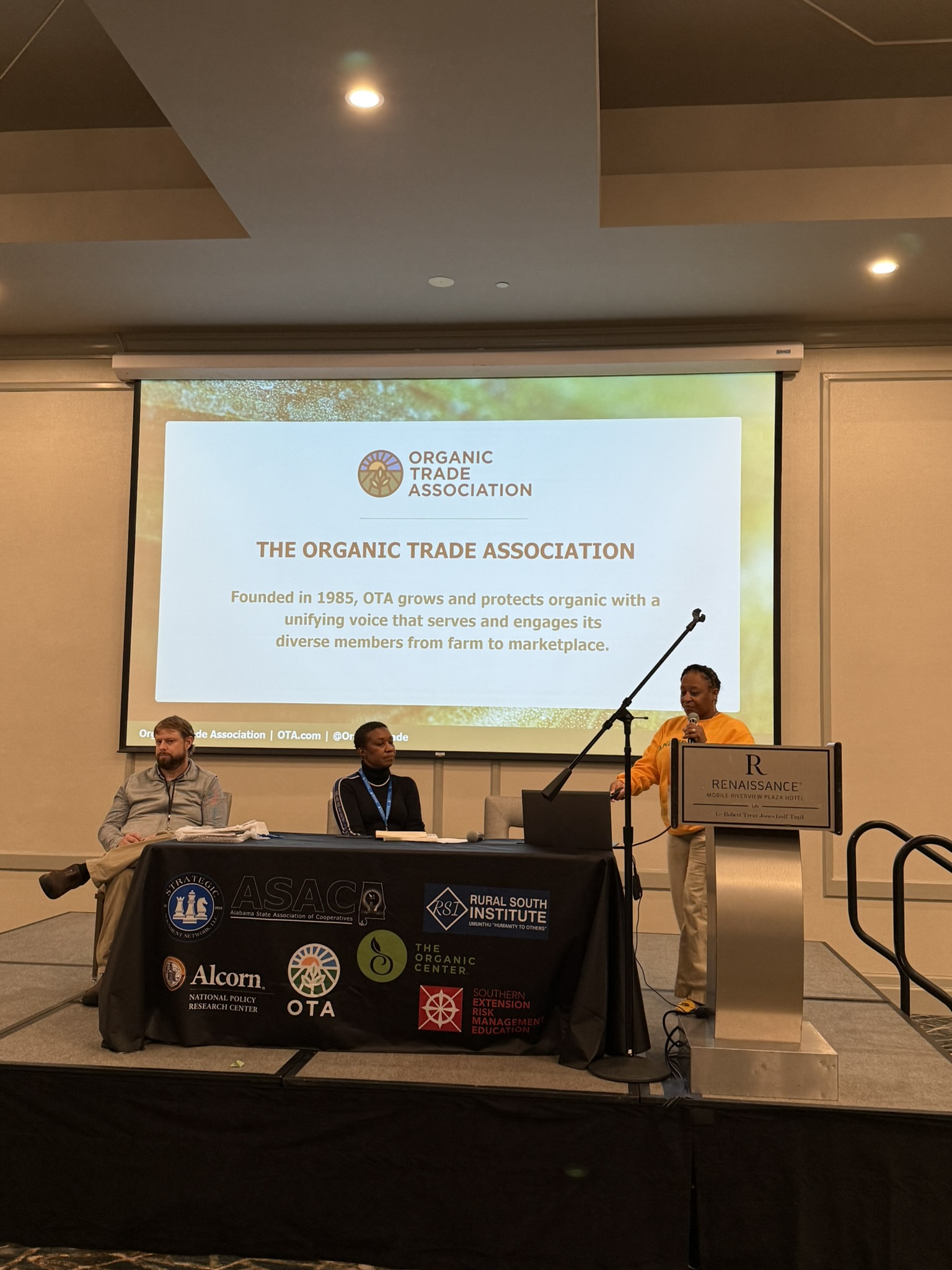
On Friday, OTA and The Organic Center teamed up again for “Organic Production A–Z,” a packed general session that walked farmers through the practical and economic side of organic:
- Marie Antoinette McGruder, founder of McGruder Farms – Home of the Black Warrior Queen’s Bounty in Sawyerville, Alabama, shared her journey transforming forested land into a thriving, certified organic farm. She talked about soil health, living with (instead of fighting) ants and other insects, and the importance of seeing land as an ancestral trust: “If we are stewarding land—whether it’s our ancestors’ land or we’re becoming the new ancestors—we have to leave that land better than we found it.”
- Marie also emphasized how building healthier soils and working with nature over time reduces pest pressure and strengthens the entire ecosystem on the farm.
- Stephanie Jerger then walked participants through what makes the USDA Organic seal different from other claims, explaining third-party certification, traceability, and the three-year transition period. She broke down the data on consumer trust and demand for organic, highlighting that:
- Roughly 90% of consumers recognize the organic seal,
- A majority are willing to pay more for organic products, and
- Organic continues to be a “bright spot” in the marketplace, even when conventional markets slow.
Stephanie grounded the conversation locally with examples from Publix stores in Alabama, using price comparisons between conventional and organic eggs, blueberries, tomatoes, and milk to show the real premium and demand for organic in the very communities where participants live and farm. She also shared state-level data:
- Alabama currently has 34 certified organic operations and 869 organic acres.
- Mississippi has 28 operations but over 6,600 organic acres, indicating larger organic operations in the region.
- In both states, roughly 7 in 10 households purchase organic, demonstrating a strong and growing market that local farmers can tap into.
Lifting up Black farmers, cooperatives, and the next generation
Throughout the conference, speakers centered Black farmers, cooperatives, and historically underserved producers across the South. Sessions led by the Alabama State Association of Cooperatives, the Federation of Southern Cooperatives/LAF, 1890 institutions, and Extension programs showcased the role of cooperatives in land retention, access to credit, and community wealth-building.
Breakout conversations surfaced critical needs and opportunities, including:
- More age-appropriate, culturally relevant education and outreach, especially for older farmers who may be newer to technology but bring decades of on-the-ground wisdom.
- Mobile and place-based technical assistance, from drone demonstrations to soil health assessments and mental health support.
- Mentorship and youth programs in Alabama, Mississippi, and Arkansas that are cultivating the next generation of farmers, foresters, and agribusiness leaders.
The pop-up farmers’ market on Friday brought these themes to life, allowing participants and the public to buy fresh, local produce and value-added products directly from farmers and cooperatives, reinforcing that “organic” and “local” are powerful together.
Crops Under Cover & research in action
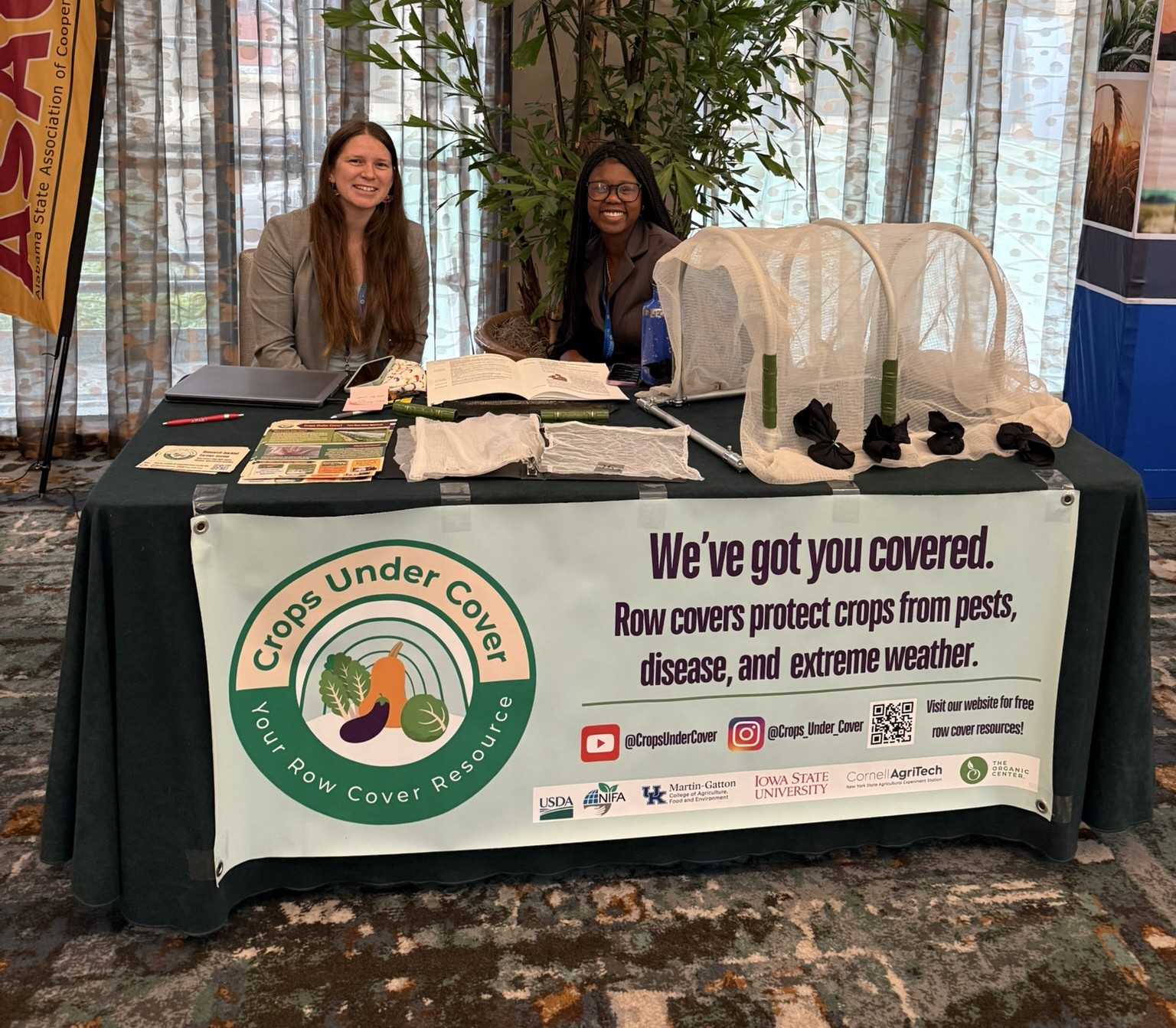 The conference also featured the Crops Under Cover research team, one of The Organic Center’s OREI projects:
“Enhancing Efficacy of Protective Netting for Climate and Pest Resilience.”
Their presence and tabling highlighted how cutting-edge research—like using netting systems to reduce pest pressure and protect crops under increasingly volatile weather—can be translated into practical tools for Southern growers, including those transitioning to organic.
TOC’s broader research portfolio and Amber’s myth-busting session helped connect the dots between science, on-farm experience, and policy, ensuring that farmers had access not only to programs, but to evidence-based solutions that work in real fields and high tunnels across the region.
Member connections & organic community
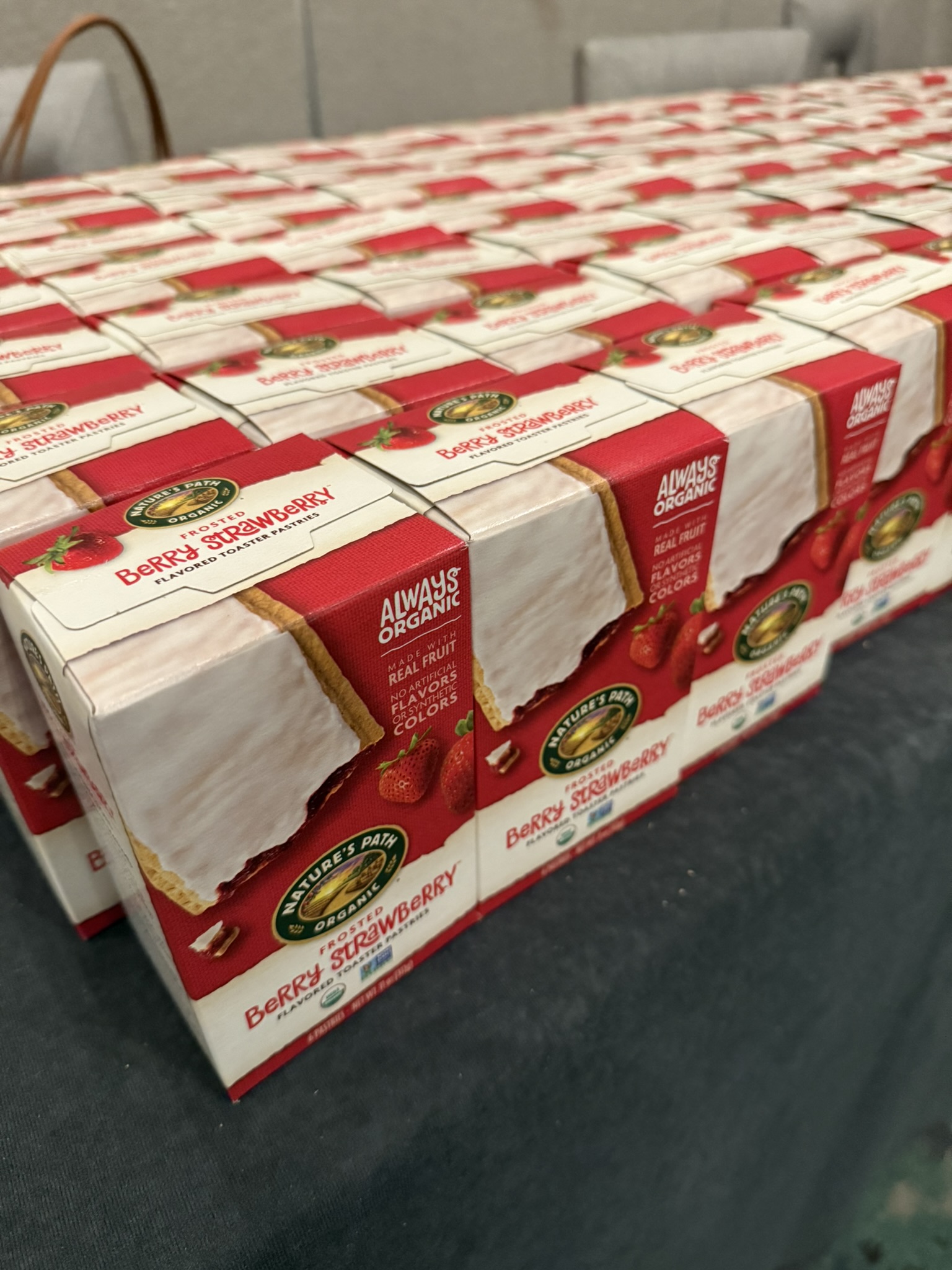
The Organic Center and OTA exhibit table quickly became a hub for conversation, questions, and connection. OTA members helped make the table feel like a true community touchpoint, with contributions and samples from:
- Dr. Nettles Natural Beauty (Dr. Dana Nettles also led a session on herbal teas to minimize stress),
- McGruder Farms,
- Nature’s Path,
- General Mills,
- Java Dark Beauty, and
- Lundberg Family Farms
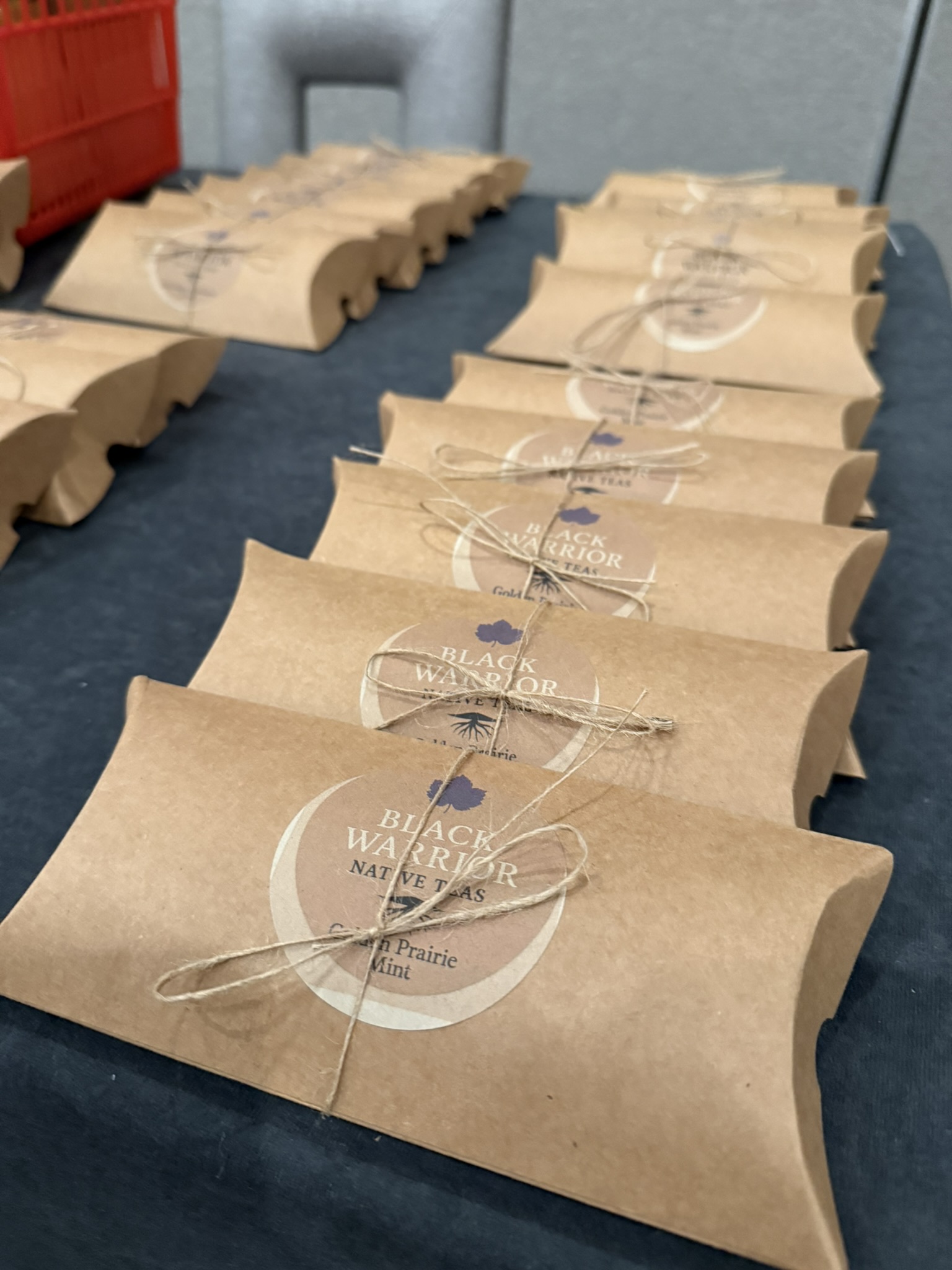
These offerings weren’t just “goodies”—they were tangible examples of the organic value chain in action, from Black-owned farms in Alabama’s Black Belt to national brands that rely on organic supply chains and standards.
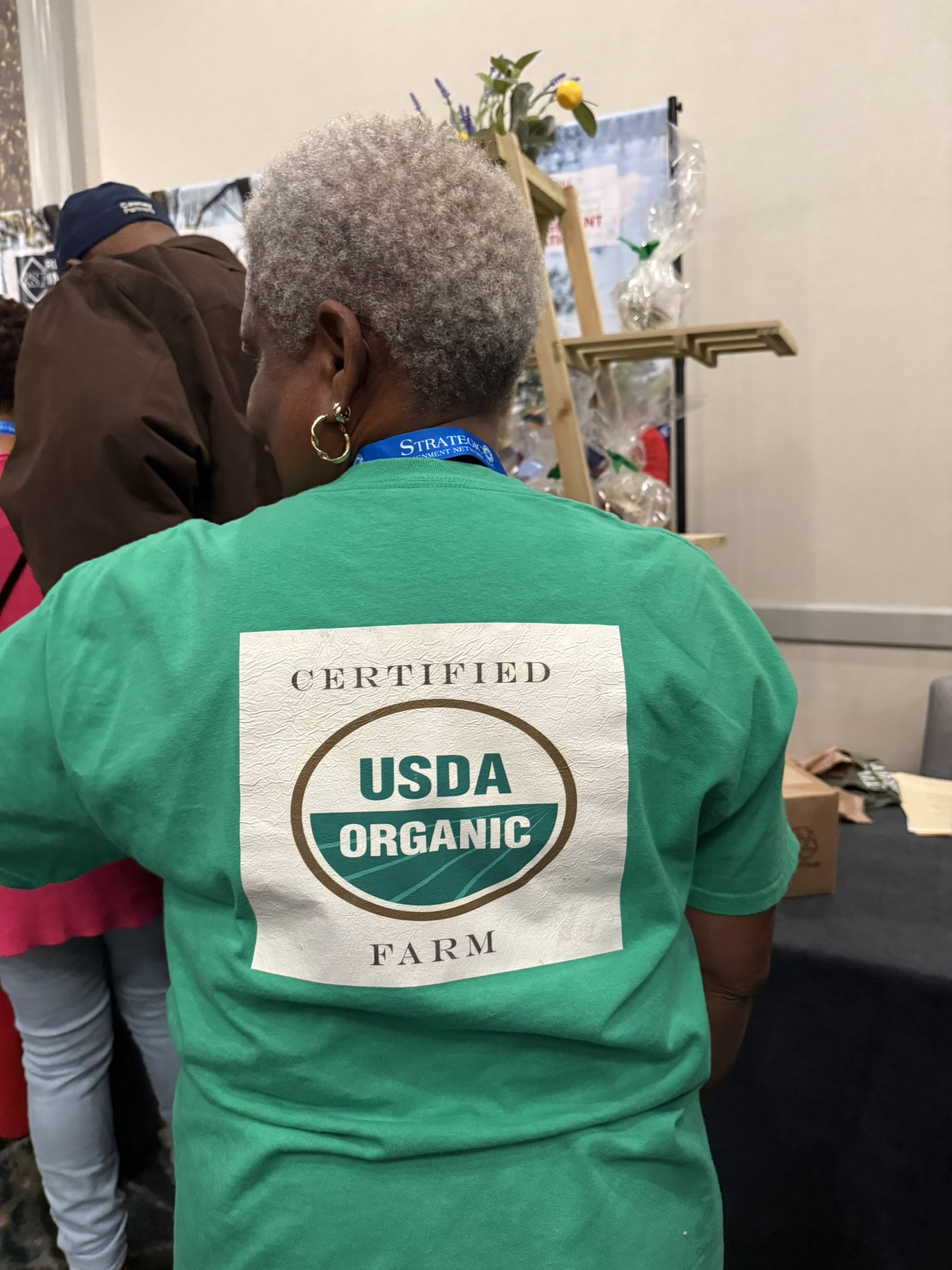
OTA staff also had the opportunity to connect one-on-one with members like Dr. Dana Nettles and Marie McGruder, listening to their experiences navigating certification, markets, and community roles as both farmers and educators.
Mental health, wellness & the whole farmer
In keeping with the conference’s holistic theme, sessions wove together health, wellness, and farm viability. From yoga and herbal teas for stress management to Dr. Connie Baptiste’s powerful keynote on mental health, resilience, and the intersection of food, farming, and healing, participants were reminded that farmer well-being is foundational to farm sustainability.
Farmers discussed everything from burnout and paperwork overload to the emotional toll of climate disasters and economic uncertainty—and how peer support, cooperative models, and culturally competent mental health resources can make the difference between farms closing and communities thriving.
Looking ahead: building on momentum
As the conference closed, one message was clear: the South is rich with farmers, land, and leadership that are ready for organic opportunities—many just need access to the right tools, support, and markets.

Through this conference, The Organic Center and OTA were able to:
- Share science-based information on the benefits and realities of organic production,
- Demystify the certification process and highlight real market demand for organic products in Alabama and neighboring states,
- Connect directly with members and farmers who are already leading in this space, and
- Strengthen partnerships with organizations working every day to support small farms, conserve land, and build equitable food systems.
The work doesn’t end in Mobile. The Organic Center and OTA will continue collaborating with Rural South Institute, ASAC, 1890 institutions, Extension programs, and local cooperatives to support Southern farmers and other producers who have historically been left out of agricultural resources and markets.
Together, we’re helping ensure that the stories, wisdom, and leadership of Southern farmers are not only recognized, but resourced—and that organic remains a powerful tool for environmental stewardship, community health, and economic opportunity across the region.